4 October 2026
How to choose a badminton racket and string setup
A new racket will not automatically solve technical problems. The right setup can, however, help you control the shuttle and feel comfortable on court. The best choice is not necessarily the most expensive model; it is the combination of racket, string, tension, and grip that suits your game.
Balance and shaft flexibility
A more head-heavy racket can add mass to rear-court strokes but often requires good preparation. A head-light racket is easier to move quickly and is therefore popular in doubles. An even balance sits between the two and is a sensible starting point for many players.
Shaft flexibility also changes how a racket feels. A more flexible shaft can support a smooth acceleration. A stiff shaft responds more directly but requires an accurate contact point and an appropriate swing.
What string tension changes
Higher tension can feel direct when the shuttle meets the centre of the strings. At the same time, the effective sweet spot becomes smaller. Players whose contact point still varies will not automatically benefit from adding more tension.
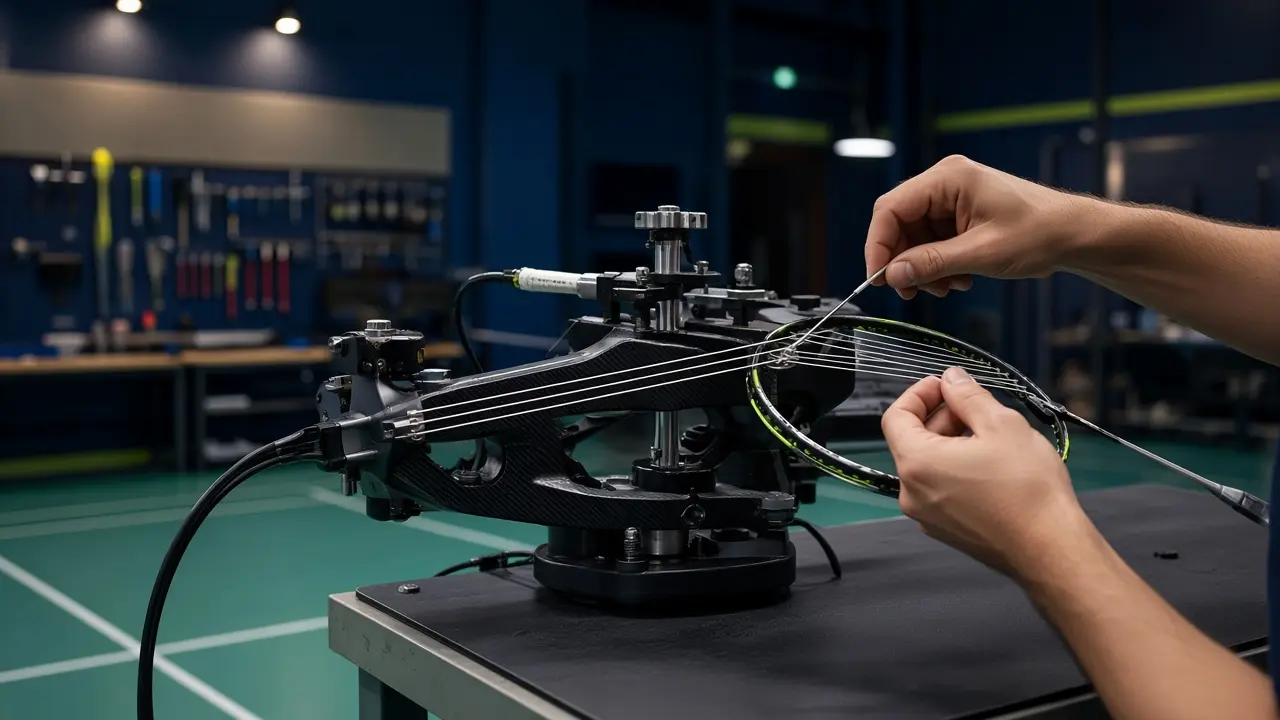
Every string gradually loses tension. Visible notches, fraying, strings that move frequently, or a clear change in feel are reasons to have the string bed checked. If a string breaks, removing it promptly helps avoid leaving the frame under uneven tension.
Do not overlook the grip
A grip that is too thick can make it harder to switch between forehand and backhand grips. A worn or slippery overgrip encourages unnecessary tension in the hand. The right size should allow a secure but relaxed hold and quick finger control.
Advice is more useful than comparing numbers
A useful recommendation considers your level, discipline, current equipment, and preferences. Bring your existing racket if possible: wear patterns and the condition of the strings often reveal more than a model name alone.
For questions about rackets or restringing, contact us through the contact form.